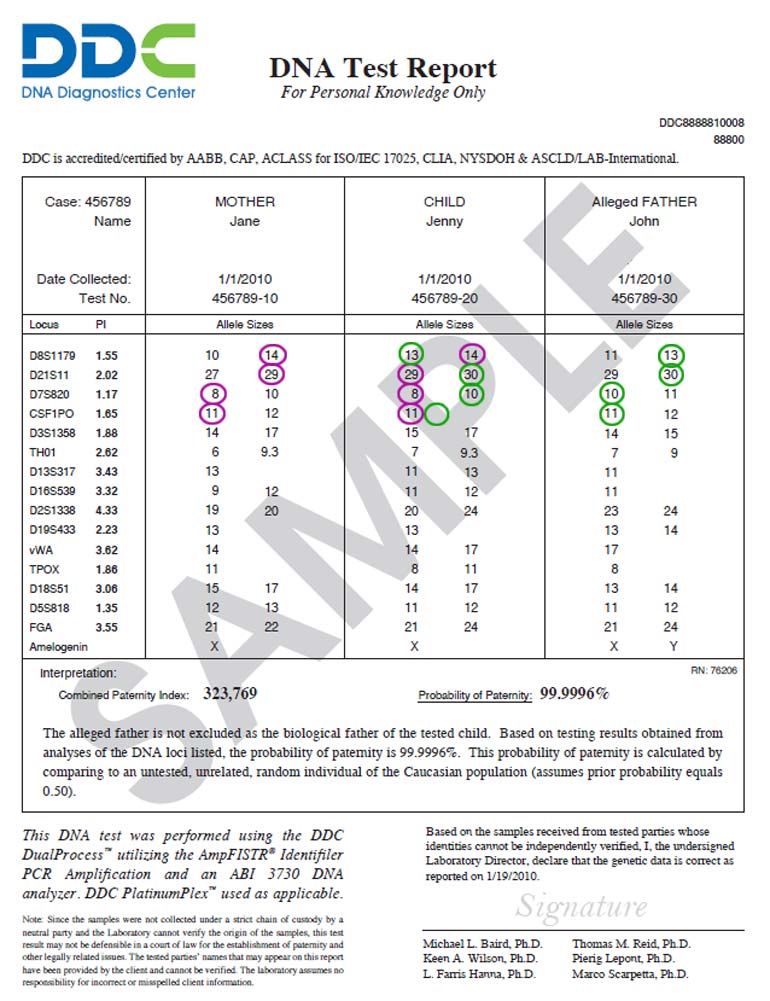
To determine if a DNA test might be fake or unreliable, consider the following signs:
Lack of Accreditation: Legitimate DNA testing labs are accredited by recognized bodies like the AABB (American Association of Blood Banks) or ISO. If a lab lacks accreditation, it’s a red flag.
Unprofessional Results: Real DNA test results include detailed information, such as chain-of-custody documentation (for legal tests), and often include statistical probabilities. Results that are vague or overly simplistic may be suspect.
No Chain of Custody: For legal DNA tests, a strict chain of custody process is required to ensure the integrity of the samples. If a test claiming to be for legal purposes skips this step, it’s likely not legitimate.
Inconsistent Communication: If the company providing the test is hard to reach, provides unclear or contradictory information, or lacks transparency in their processes, it’s a cause for concern.
Too-Good-to-Be-True Offers: Be wary of companies offering DNA tests at prices significantly lower than reputable services, especially without clear information about lab processes and accreditation.
Unverified Collection Methods: Legitimate DNA tests often require specific sample collection methods, such as cheek swabs or blood samples, collected in a controlled environment. If the collection method seems unscientific or unreliable, the test may be fake.
Select the fields to be shown. Others will be hidden. Drag and drop to rearrange the order.